Neptune Aquatics

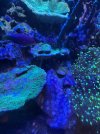
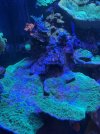
Is this damages from nudibranch?

Matma

Supporting Member
Hello BAR friends,

My montipora suddenly showed crater holes in the last 4-5 days and getting worse everyday. This started with the green chili pepper, then spread to nearby bonsai and others. I think these are from montipora eating nudibranch but want to confirm before dipping treatment.

Thanks in advance for your help.
 

Attachments

  • IMG_6677.jpeg
    IMG_6677.jpeg
    106 KB · Views: 31
  • IMG_6676.jpeg
    IMG_6676.jpeg
    98.2 KB · Views: 31
My Montipora actually exhibited no noticeable symptoms, I just happened to see one crawling about one time. Easiest way to find out is crack off a piece and take a look at the underside, particularly near the boundary between live tissue and skeleton. They look like tiny little fuzzy things a few mm across at most.
 
Have you inspected the montis after lights are off? I lost a battle with MENs back in 2018. I only found them bc I had turned lights off for a few days to try to get a handle on some cyano or something. I had never seen that tank in the dark before, which might be why I didn’t know they were in there.
 
I beat montipora eating nudibranchs with an 8 month fallow period.

I also increased tank temp to speed up their metabolism and encourage their starvation
 
I tried to look for them after light out but did not see any on the surface. They must have come out much later in the night. I removed the colony (painful cuz I had to break it to pieces to remove :-( ), dip in iodine and put in a quarantine tank.

@tribbitt, did you go fallow by removing all monti from your tank? What’s about chalice? I read they eat chalice too.

Also, I added a lawn mower blenny recently. Can that also cause this problem?

Thanks everyone so much for sharing your experiences.
 
I tried to look for them after light out but did not see any on the surface. They must have come out much later in the night. I removed the colony (painful cuz I had to break it to pieces to remove :-( ), dip in iodine and put in a quarantine tank.

@tribbitt, did you go fallow by removing all monti from your tank? What’s about chalice? I read they eat chalice too.

Also, I added a lawn mower blenny recently. Can that also cause this problem?

Thanks everyone so much for sharing your experiences.
I removed all Montipora sp. corals, all Anacropora sp. corals, and one supposed Porites sp. that I decided looked similar enough that it could potentially have been mis-ID'd. I have not heard of montipora-eating nudibranchs eating chalices (which are in a totally different family, too) but anything can happen. I had chalices in my tank during the fallow period and still succeeded.

Iodine dip will not kill nudibranchs very effectively, and potassium chloride hardly touches them. Eggs left behind after Revive or other commercial dips will survive.

The only dip I know does in fact kill all adults (and reportedly eggs, too) is potassium permanganate, which is relatively harsh on the coral. I used this effectively to kill nudibranchs, and the corals tolerated it, however there must have been either veligers in the QT I had at the time or other adults roaming in the tank, because a few weeks later there were new adults and new eggs.

An overzealous lawnmower blenny could be irritating the coral for sure. If that's the case then it's a much simpler problem. Have you seen it hanging out on the Montipora a lot?
 
I removed all Montipora sp. corals, all Anacropora sp. corals, and one supposed Porites sp. that I decided looked similar enough that it could potentially have been mis-ID'd. I have not heard of montipora-eating nudibranchs eating chalices (which are in a totally different family, too) but anything can happen. I had chalices in my tank during the fallow period and still succeeded.

Iodine dip will not kill nudibranchs very effectively, and potassium chloride hardly touches them. Eggs left behind after Revive or other commercial dips will survive.

The only dip I know does in fact kill all adults (and reportedly eggs, too) is potassium permanganate, which is relatively harsh on the coral. I used this effectively to kill nudibranchs, and the corals tolerated it, however there must have been either veligers in the QT I had at the time or other adults roaming in the tank, because a few weeks later there were new adults and new eggs.

An overzealous lawnmower blenny could be irritating the coral for sure. If that's the case then it's a much simpler problem. Have you seen it hanging out on the Montipora a lot?
 
Thanks. I will try potassium permanganate in QT. As for the blenny, that is a recent addition before this outbreak. He is all over the tank but not particularly on the monti all the time. I saw him picking on algae but have not observed him picking on coral. I have had these colony for two years and this happened suddenly in the last 5 days. That is why I wonder about the blenny.
 
Thanks. I will try potassium permanganate in QT. As for the blenny, that is a recent addition before this outbreak. He is all over the tank but not particularly on the monti all the time. I saw him picking on algae but have not observed him picking on coral. I have had these colony for two years and this happened suddenly in the last 5 days. That is why I wonder about the blenny.
I’d put the Benny in an acclimation box and see if coral recovers
 
Thanks. I will try potassium permanganate in QT. As for the blenny, that is a recent addition before this outbreak. He is all over the tank but not particularly on the monti all the time. I saw him picking on algae but have not observed him picking on coral. I have had these colony for two years and this happened suddenly in the last 5 days. That is why I wonder about the blenny.

Please do not broadcast potassium permanganate if that’s what you meant. It’s a dip, if you use it in the tank it will wipe out nearly everything

I did not use an aquarium brand of potassium permanganate. I purchased mine from a chemical supply company, Loudwolf
 
That doesn't look like MEN. MEN would start at the edges and be moving inwards. You also would see them when looking at the underside. They're small, but not microscopic. Especially if you look at it underwater you'll clearly see them. Size of rice with wavy fringes.

To me that looks more like the LPS right next to it having stingers hitting it, or something attacking it from above.
 
Back
Top