


My wonderful AP Biology teacher gave me a microscope. Of course, some of the first things I took a look at are reef organisms. I am open to suggestions of other things to look at!
Because there's so many endosymbiotic photosynthesizers in the marine environment, I picked a red photosynthetic flatworm, a tentacle of a F. paraancora, and a photosynthetic sponge. Also, a root from a Salvinia minima floating plant in my freshwater tank.
Flatworms not under microscope:
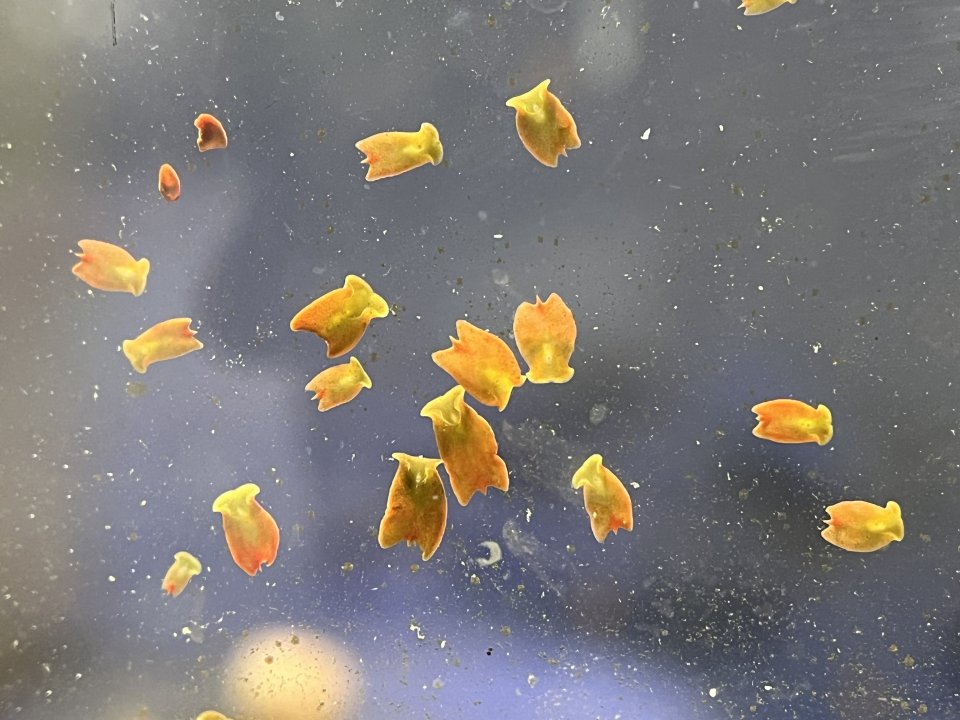
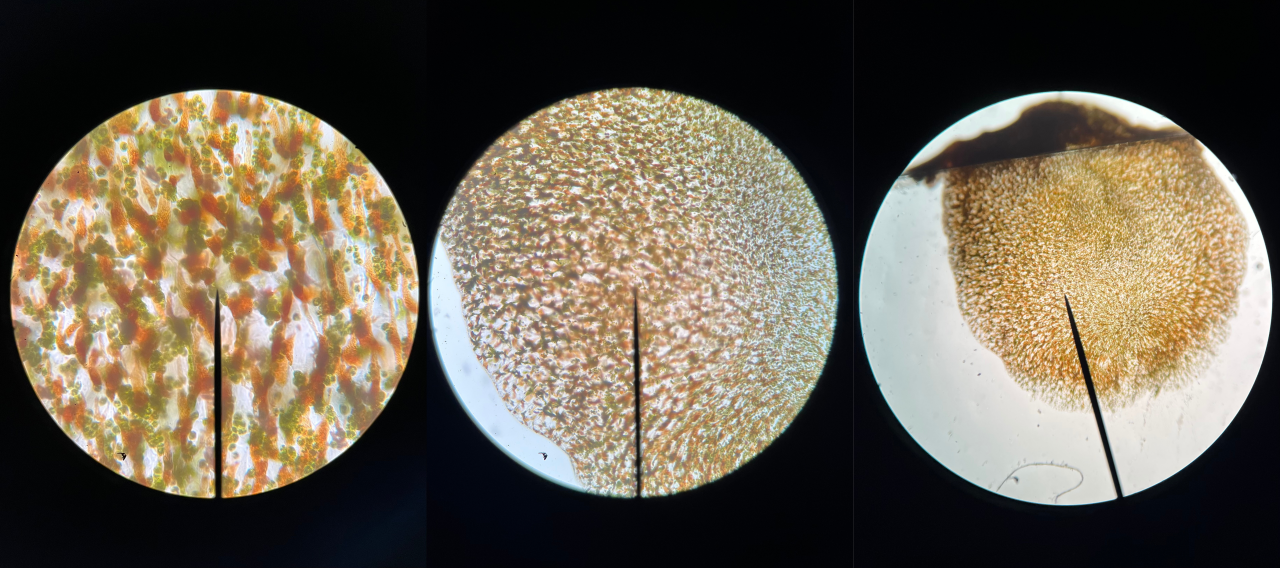
Flatworms under microscope at 400x, 100x, 40x. The green circles are its symbiotic alga, which was really cool to see. I didn't expect its tissue to be so vacuolated or to have the texture and organization it does.
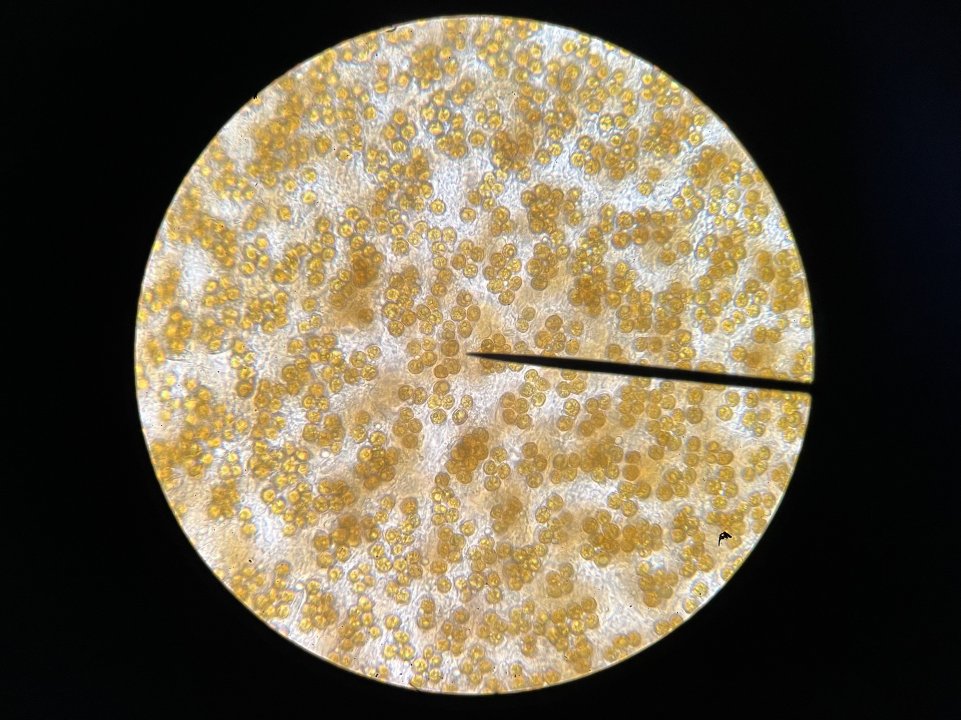
This is a side-on view of F. paraancora "bicolor hammer" tentacle at 400x. The golden-brown circles are the zooxanthellae: dinoflagellates in the genera Symbiodinium, Cladocopium, prob others as well
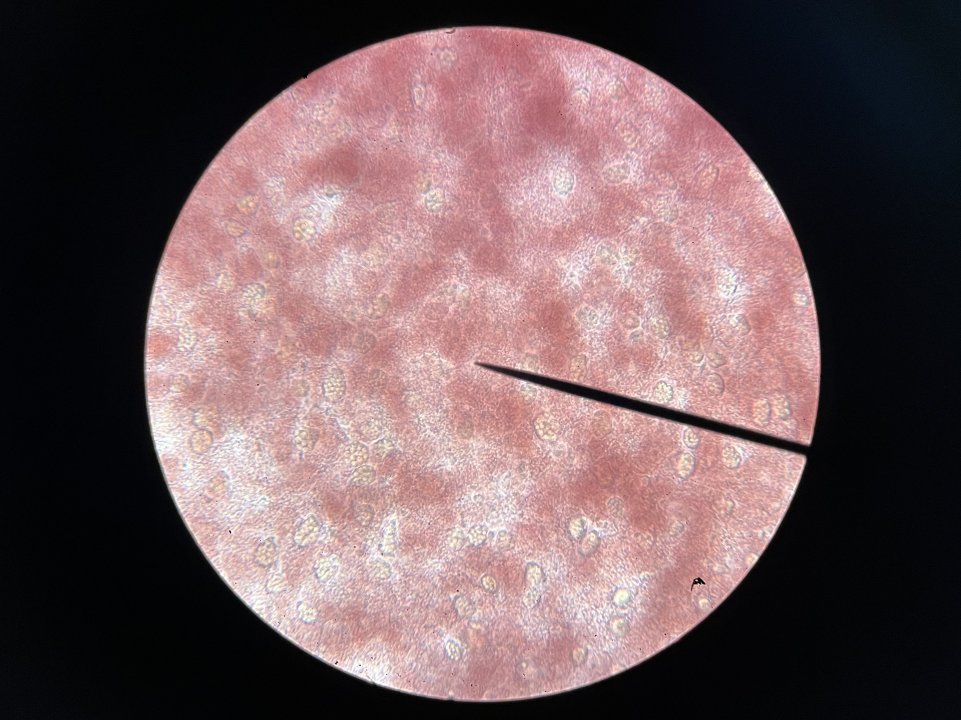
This is a piece of photosynthetic purple sponge from @psidriven at 400x. Not the best slide but it was tough to get a good thin sample.
I know the compression massacred it, but the pink noise is the symbiotic cyanobacteria which perform photosynthesis for the sponge. Despite being "cyan"obacteria, these ones produce red phycoerythrins. Under sunlight it looks blue-violet and not red, so I'm guessing the sponge produces iridophores to protect itself from harsh wavelengths?
Also there's some large cells or bundles of cells scattered throughout. I think that might be the sponge itself?
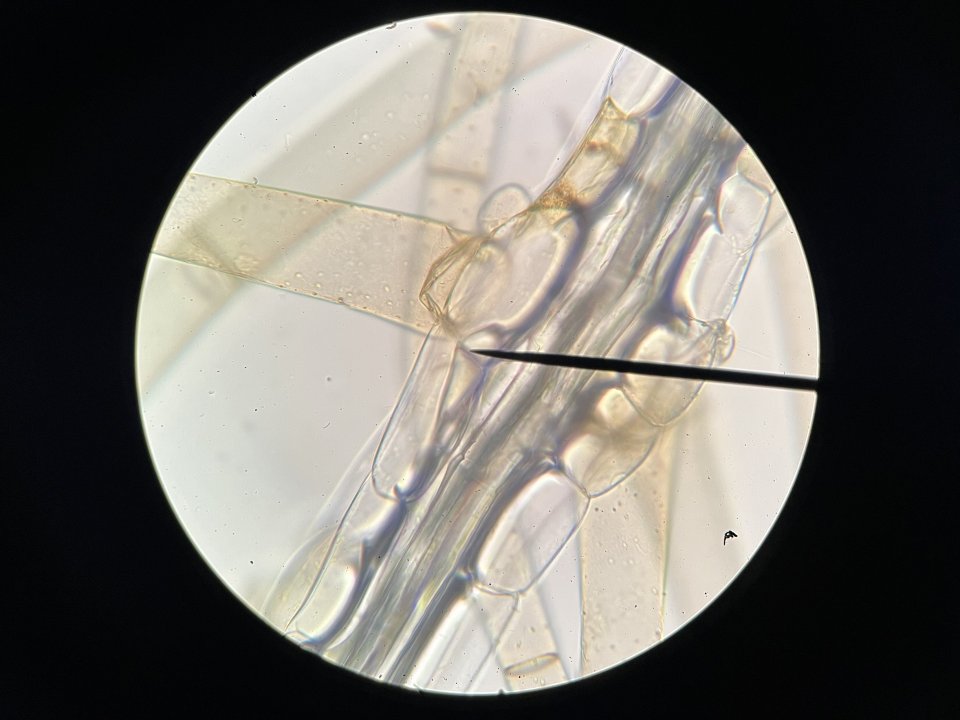
In comparison, plant cells (especially root cells) are massive! These are Salvinia minima roots at 400x.
Again if you have some other cool organisms in mind, I'm open to suggestions!
Because there's so many endosymbiotic photosynthesizers in the marine environment, I picked a red photosynthetic flatworm, a tentacle of a F. paraancora, and a photosynthetic sponge. Also, a root from a Salvinia minima floating plant in my freshwater tank.
Flatworms not under microscope:
Flatworms under microscope at 400x, 100x, 40x. The green circles are its symbiotic alga, which was really cool to see. I didn't expect its tissue to be so vacuolated or to have the texture and organization it does.
This is a side-on view of F. paraancora "bicolor hammer" tentacle at 400x. The golden-brown circles are the zooxanthellae: dinoflagellates in the genera Symbiodinium, Cladocopium, prob others as well
This is a piece of photosynthetic purple sponge from @psidriven at 400x. Not the best slide but it was tough to get a good thin sample.
I know the compression massacred it, but the pink noise is the symbiotic cyanobacteria which perform photosynthesis for the sponge. Despite being "cyan"obacteria, these ones produce red phycoerythrins. Under sunlight it looks blue-violet and not red, so I'm guessing the sponge produces iridophores to protect itself from harsh wavelengths?
Also there's some large cells or bundles of cells scattered throughout. I think that might be the sponge itself?
In comparison, plant cells (especially root cells) are massive! These are Salvinia minima roots at 400x.
Again if you have some other cool organisms in mind, I'm open to suggestions!

