Cali Kid Corals

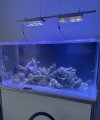
127g Acrylic build

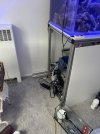
Quick update painted the top and bottom plywood white still need to grab some more mdo from the lumber yard to finish off the enclosure of the stand.
IMG_0935.jpeg
IMG_0936.jpeg


Went to homedepot and remembered that they sell window film, so i bought some 5% film and used that to cover the back.
IMG_1050.jpeg
IMG_1051.jpeg
 
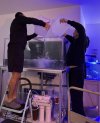
Beginning of December, I finally got the tank filled with the help of @Coral reefer — huge step seeing the tank come to life.

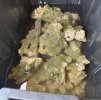
By the end of the month, I was on the hunt for rock. Luckily, a BAR member was breaking down a system and getting rid of some real live rock. I jumped on the opportunity and picked it up right away.

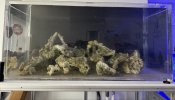
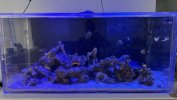
Spent time sculpting the tank exactly how I envisioned it — creating small caves, swim-throughs, and arches so the fish have plenty of places to hide and explore. I wanted a natural look with good flow and depth, not just a rock wall.

This is where the tank really started to feel like a reef.
 

Attachments

  • IMG_1561.jpeg
    IMG_1561.jpeg
    163.1 KB · Views: 21
  • IMG_1556.jpeg
    IMG_1556.jpeg
    120.9 KB · Views: 21
  • 78788380110__8EB32A3D-AA1A-4678-86DE-3CCE4D554027.jpeg
    78788380110__8EB32A3D-AA1A-4678-86DE-3CCE4D554027.jpeg
    70 KB · Views: 22
Around that time, I made the decision to break down my 24g reef and transition everything over to the fowlr.

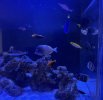
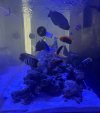
The first fish to be introduced were my clown pair and my sixline wrasse — they officially became the pioneers of the new tank.

For now, all of my coral is being housed safely at @memorej’s system while this tank continues to mature.

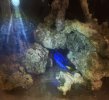
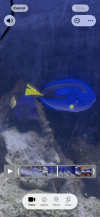
That same day, a BAR member was rehoming a Paracanthurus hepatus, and I gladly agreed to give it a new home. Fat, healthy, and actively swimming — exactly how you want to see them. It settled in quickly and has been cruising the rockwork ever since.
 

Attachments

  • IMG_1629.jpeg
    IMG_1629.jpeg
    91.3 KB · Views: 13
I’m sure many would say I needed to take things slower — and I’ll admit… I didn’t.

The consequences came quick later on.

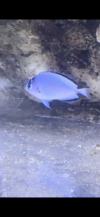
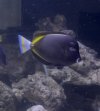
That same week, I added more to the tank — a beautiful female Watanabe Angelfish (Genicanthus watanabei) and a Purple Tang along with a (Acanthurus nigricans)Goldrim tang. All three were stunning additions and I was excited to see the tank filling out, but in hindsight, I pushed the timeline way too fast for a new system.

Stocking ramped up quickly, and while everything looked fine at first, I was about to learn that a young tank will always humble you.
 

Attachments

  • IMG_2561.png
    IMG_2561.png
    261.8 KB · Views: 12
  • IMG_2562.png
    IMG_2562.png
    364.8 KB · Views: 12
  • IMG_2563.jpeg
    IMG_2563.jpeg
    42.8 KB · Views: 12
By the month of January, I thought I could take the same risks I’ve taken in the past.

I went to 6th Ave on a Sunday for bagged fish. I knew the risks. I knew the consequences. And I still chanced it.

I picked up a few fish — and one in particular already looked questionable. The Pink Square Anthias. Something seemed off… but I ignored that gut feeling and brought it home anyway.

A few days later, I started noticing signs of ich — possibly even flukes — showing up in the tank. Not long after, the anthias was the first fish to go.

That one hurt. Not just because it was a beautiful fish, but because I knew better. I rushed the system and I ignored the warning signs.

The tank was about to go through its first real test, my first outbreak after being 2 years into the hobby.

That purchase ended up costing me more than I expected. In total, I lost three fish from that batch — the Pink Square Anthias being the first to go.

Around that same time, I noticed another BAR member possibly dealing with a similar outbreak and they were running the hyposalinity method. Seeing that gave me some direction.

Luckily, I was able to manage things before it completely wiped out my livestock.

I picked up MetroPlex, KanaPlex, and Focus, hoping the medicated food route would turn things around. To be honest, I didn’t see much of a difference. The spots would seem to fade, then reappear. Stress levels were high — for the fish and for me.

I decided to gradually lower salinity from 1.025 down to 1.017. I fed heavy, kept nutrients stable, and closely observed behavior daily. Slowly… it came and went. I was worried it wouldn’t work because improvement wasn’t obvious at first.

And then I did something most wouldn’t recommend — I added a small amount of Copper Power directly to the tank.

Risky. Controversial. But at that point I was trying to prevent a total crash.

Thankfully, I didn’t lose any more fish after that.
 
• January 15th – Added 2.82 oz of Copper Power
• January 17th – Added 3.0 oz of Copper Power

Since then, I haven’t noticed any visible signs of ich or flukes on the fish.

Now, I know that doesn’t mean I’m completely in the clear. Ich can remain in the water column and within the system — it doesn’t just magically disappear. But I can confidently say it’s being managed for now.

The fish are eating, swimming normally, and showing no external symptoms. That alone feels like a win considering how January started.

I’ll be setting up a UV sterilizer soon to help with overall parasite management and water clarity. This build humbled me early, but it’s also forcing me to tighten up my process and think long term
 
By the month of January, I thought I could take the same risks I’ve taken in the past.

I went to 6th Ave on a Sunday for bagged fish. I knew the risks. I knew the consequences. And I still chanced it.

I picked up a few fish — and one in particular already looked questionable. The Pink Square Anthias. Something seemed off… but I ignored that gut feeling and brought it home anyway.

A few days later, I started noticing signs of ich — possibly even flukes — showing up in the tank. Not long after, the anthias was the first fish to go.

That one hurt. Not just because it was a beautiful fish, but because I knew better. I rushed the system and I ignored the warning signs.

The tank was about to go through its first real test, my first outbreak after being 2 years into the hobby.

That purchase ended up costing me more than I expected. In total, I lost three fish from that batch — the Pink Square Anthias being the first to go.

Around that same time, I noticed another BAR member possibly dealing with a similar outbreak and they were running the hyposalinity method. Seeing that gave me some direction.

Luckily, I was able to manage things before it completely wiped out my livestock.

I picked up MetroPlex, KanaPlex, and Focus, hoping the medicated food route would turn things around. To be honest, I didn’t see much of a difference. The spots would seem to fade, then reappear. Stress levels were high — for the fish and for me.

I decided to gradually lower salinity from 1.025 down to 1.017. I fed heavy, kept nutrients stable, and closely observed behavior daily. Slowly… it came and went. I was worried it wouldn’t work because improvement wasn’t obvious at first.

And then I did something most wouldn’t recommend — I added a small amount of Copper Power directly to the tank.

Risky. Controversial. But at that point I was trying to prevent a total crash.

Thankfully, I didn’t lose any more fish after that.

Hopefully the fish pull through.

Don't be offended but that 6th Ave store. I heard stories about it and thought they were exaggerated. I happen to be in the city last year for a conference and decided why not I will check them out. I've frankly never seen anything more disgusting, disturbing and sickening than what I saw in that store. To the point I'm shocked that store being open and the conditions there, they must be breaking some type of cruelty to animal laws.

I've never took such a strong stance with a fish store before. Yet I would recommend not to ever give a place like that a dime. It's more humane at a seafood market. At least the fish aren't suffering any more.

Rant over. Yet how are your fish looking now.
 
Back
Top