By the month of January, I thought I could take the same risks I’ve taken in the past.
I went to 6th Ave on a Sunday for bagged fish. I knew the risks. I knew the consequences. And I still chanced it.
I picked up a few fish — and one in particular already looked questionable. The Pink Square Anthias. Something seemed off… but I ignored that gut feeling and brought it home anyway.
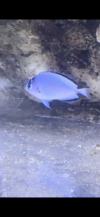
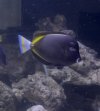
A few days later, I started noticing signs of ich — possibly even flukes — showing up in the tank. Not long after, the anthias was the first fish to go.
That one hurt. Not just because it was a beautiful fish, but because I knew better. I rushed the system and I ignored the warning signs.
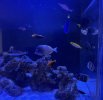
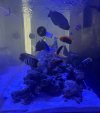
The tank was about to go through its first real test, my first outbreak after being 2 years into the hobby.
That purchase ended up costing me more than I expected. In total, I lost three fish from that batch — the Pink Square Anthias being the first to go.
Around that same time, I noticed another BAR member possibly dealing with a similar outbreak and they were running the hyposalinity method. Seeing that gave me some direction.
Luckily, I was able to manage things before it completely wiped out my livestock.
I picked up MetroPlex, KanaPlex, and Focus, hoping the medicated food route would turn things around. To be honest, I didn’t see much of a difference. The spots would seem to fade, then reappear. Stress levels were high — for the fish and for me.
I decided to gradually lower salinity from 1.025 down to 1.017. I fed heavy, kept nutrients stable, and closely observed behavior daily. Slowly… it came and went. I was worried it wouldn’t work because improvement wasn’t obvious at first.
And then I did something most wouldn’t recommend — I added a small amount of Copper Power directly to the tank.
Risky. Controversial. But at that point I was trying to prevent a total crash.
Thankfully, I didn’t lose any more fish after that.