Welcome to BAR - the Bay Area's premier saltwater hobbyists hub!
You are using an out of date browser. It may not display this or other websites correctly.
You should upgrade or use an alternative browser.
You should upgrade or use an alternative browser.

Justin's Aquaforest Oceanguard 790
- Thread starter Royce023
- Start date

Supporting Member
- Joined
- May 18, 2019
- Messages
- 144
- Thread Author
- #62
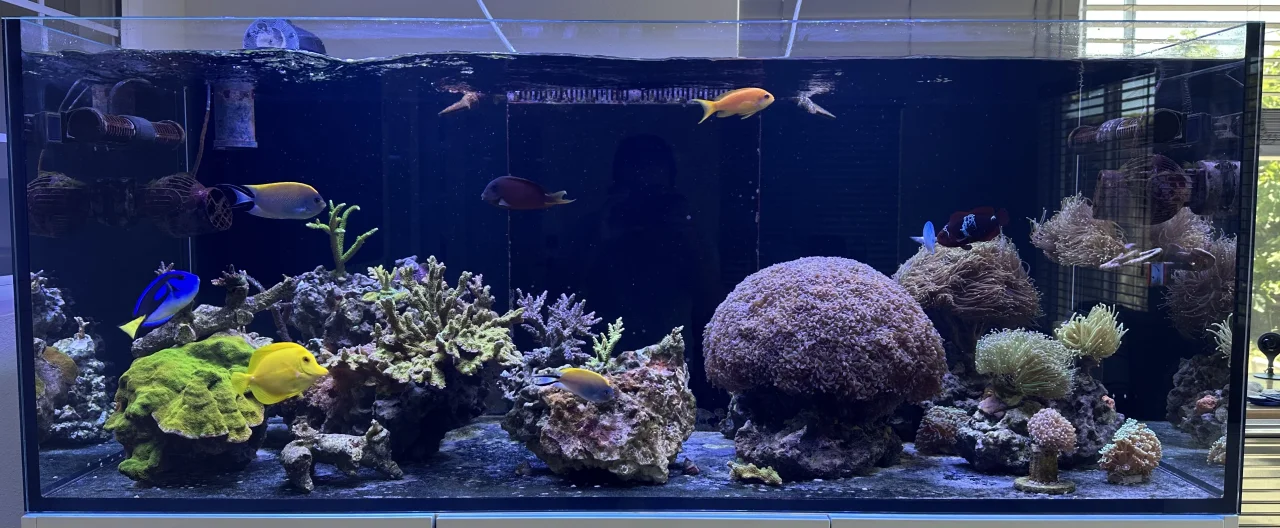
Moved some corals around. Still not happy with the placement. I want to move the Tubbs Stellata monti somewhere else but haven’t pictured a new spot yet. Want to trim the large hammer but my wife doesn’t want me to touch it.

- Joined
- May 24, 2022
- Messages
- 5,420
Love my A100 also, it's so silentRemoved the Hydros from the controller board - now it looks much cleaner. Replaced one of the Sicce SDC 6 to an Abyzz a100.
View attachment 79748
Supporting Member
- Joined
- May 18, 2019
- Messages
- 144
- Thread Author
- #67
Yea, I can't wait for it to grow out. Just need a bernardpora to complete my flow pot coral collection.The ORA red goni is a classic and looks great under daylight

Supporting Member
- Joined
- Jan 15, 2023
- Messages
- 3,498
The cup does not have a drain?Getting lazy. I connected a spare doser to my skimmer cup so that when it is full, it will turn on for about 3 min and pump out skimmate to an outside drain.
View attachment 80662
Supporting Member
- Joined
- May 18, 2019
- Messages
- 144
- Thread Author
- #70
It does, but I didn’t make the hole in my wall large enough to fit an additional tube so I opted for this route. The hole in the wall is also at a higher level than the cup, so I don’t think it would work.The cup does not have a drain?
Last edited:
Supporting Member
- Joined
- May 18, 2019
- Messages
- 144
- Thread Author
- #72
Finally automated the filling of my ATO. I am now using a brute trashcan that is located outside the house. The RODI unit automatically fills the container, controlled and maintained by an outdoor smart outlet, solenoid, optical sensor, and a float valve. The solenoid is programmed to stay on for about 2 hours, twice a week. When the water level reaches the optical sensor, the solenoid closes. There is a float valve placed at a higher position just in case the solenoid or sensor breaks.
My RODI unit came standard with an auto shutoff valve and the ability to automatically flush the RO membrane upon use and every 2 hours.
I set the level to fill 1/3 of the 35 gallon container, so that if there was an ATO pump failure (stuck on), it wouldn’t totally mess up the salinity. If everything failed, there would be a flood in my backyard so I am not too concerned.
Any thing else I should do to make it better?
My RODI unit came standard with an auto shutoff valve and the ability to automatically flush the RO membrane upon use and every 2 hours.
I set the level to fill 1/3 of the 35 gallon container, so that if there was an ATO pump failure (stuck on), it wouldn’t totally mess up the salinity. If everything failed, there would be a flood in my backyard so I am not too concerned.
Any thing else I should do to make it better?
Last edited:
Great stuff.. Have been thinking about it for a while and really want to do this mid/long term.. Would definitely like to hear more on this on how to make this better and ways to prevent floodingFinally automated the filling of my ATO. I am now using a brute trashcan that is located outside the house. The RODI unit automatically fills the container, controlled and maintained by an outdoor smart outlet, solenoid, optical sensor, and a float valve. The solenoid is programmed to stay on for about 2 hours, twice a week. When the water level reaches the optical sensor, the solenoid closes. There is a float valve placed at a higher position just in case the solenoid or sensor breaks.
My RODI unit came standard with an auto shutoff valve and the ability to automatically flush the RO membrane upon use and every 2 hours.
I set the level to fill 1/3 of the 35 gallon container, so that if there was an ATO pump failure (stuck on), it wouldn’t totally mess up the salinity. If everything failed, there would be a flood in my backyard so I am not too concerned.
Any thing else I should do to make it better?
Supporting Member
- Joined
- May 18, 2019
- Messages
- 144
- Thread Author
- #74
If this were inside a house, I would implement a leak detector to turn off the rodi system and solenoid. You can also program a “max time” for them to be on. You can also add in another solenoid that turns on based on a schedule.
Supporting Member
- Joined
- May 18, 2019
- Messages
- 144
- Thread Author
- #75
If the solenoid ever fails, I plan to replace it with a motorized ball valve which is probably more reliable.
Last edited:
Supporting Member
- Joined
- Jan 15, 2023
- Messages
- 3,498
Yes, outages seem to be too short these days days (thankfully) to starting up a generator. UPS is preferred.Power went out around 6:20am. Luckily I was awake and was able to connect the tank to my gas generator. Thinking of buying a battery.
View attachment 80851
Supporting Member
- Joined
- May 18, 2019
- Messages
- 144
- Thread Author
- #79
Yes, I think a battery that last me 8 hours should suffice. Just enough time to switch to gas just in case it last more than a day. However, unlikely in my area.Yes, outages seem to be too short these days days (thankfully) to starting up a generator. UPS is preferred.
Supporting Member
- Joined
- May 18, 2019
- Messages
- 144
- Thread Author
- #80
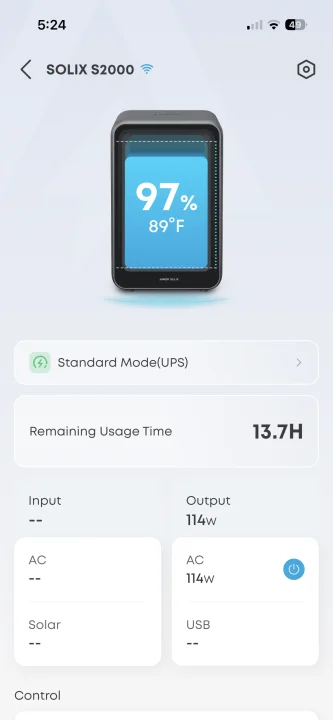
Installed an Anker Solix s2000 battery as a UPS. My hydros controller (skimmer, ATO, AWC, secondary return pump), primary return, and 2x gyres are connected. It provides me enough time (>8 hours) to switch to a gas generator for a longer power outage.

About Us
Welcome to BAR!
Bay Area Reefers (BAR) is a club for reef aquarists in the San Francisco Bay Area. The primary purpose of BAR is to promote, foster, and encourage education and appreciation for the ethical husbandry and propagation of marine life.
-The Board of Directors (BOD)